
LVR CPR Course Orange - Low Voltage Rescue & CPR Training
Looking for an LVR CPR course in Orange, NSW? FindTraining connects electricians, apprentices and electrical workers with a network of local trainers delivering Low Voltage Rescue (LVR) and CPR training. Learn how to respond to electrical emergencies, safely rescue a casualty from a live low voltage panel and provide cardiopulmonary resuscitation.
The combined LVR CPR training course includes two nationally recognised units: UETDRMP018 Perform rescue from a live low voltage panel and HLTAID009 Provide cardiopulmonary resuscitation. Training covers electrical hazards, safe isolation, rescue equipment, CPR and AED use. Both units require practical assessment.
Training is delivered through approved partners working under Allens Training Pty Ltd, RTO 90909. Our network follows consistent training and assessment standards while helping students access courses in their local area. LVR training is relevant to licensed electricians, maintenance technicians, apprentices and Electricity Supply Industry (ESI) workers.
If you need an LVR CPR course in Orange, FindTraining makes it easier to access nationally recognised training through our established partner network. Check the current booking options for local course dates, venues and prices.
Featured Providers


Search for Specific Delivery Mode
Other Training Options


LVR CPR Course Overview
- Course: Low Voltage Rescue and CPR.
- Units: UETDRMP018 and HLTAID009.
- Training: Nationally recognised training.
- Training network: Allens Training approved partners.
- Suitable for: Electricians, apprentices and electrical industry workers.
- Skills: LV panel rescue, CPR, AED use and emergency response.
- Delivery: Face-to-face or eligible blended training.
- Assessment: Theory and practical skills.
- Renewal: Recommended every 12 months.
- Orange dates and venues: Confirm current local availability.
LVR CPR Training Through Our Network of Quality Local Trainers
FindTraining helps electrical workers access nationally recognised training through the Allens Training partner network.
Approved training partners deliver and assess courses on behalf of Allens Training Pty Ltd, Registered Training Organisation (RTO 90909). They operate under the RTO's training and assessment requirements.
This model brings together local training access and consistent national standards. Whether you are booking for yourself or organising training for a team, the focus is on receiving the required skills and recognised competencies.
For students in Orange and the Central West NSW region, FindTraining provides a simple way to find suitable course information and access training through our network.
Why Train Through FindTraining?
Our network brings together training partners who deliver courses under a shared RTO framework.
This means students can access training that follows the same applicable competency and assessment requirements, regardless of which approved partner delivers the course.
Key benefits include:
- Access to an established network of quality training partners
- Nationally recognised units of competency
- Consistent training and assessment standards
- Practical learning based on workplace emergency situations
- Training options across different Australian locations
- Support for individual enrolments and eligible group bookings
The goal is to make quality, nationally recognised training easier to access close to where people live and work.
What Is LVR CPR Training?
LVR CPR training combines low voltage rescue with cardiopulmonary resuscitation.
Low voltage rescue training teaches workers how to respond when someone is exposed to an electrical hazard. It covers hazard assessment, safe isolation procedures and the correct use of rescue equipment.
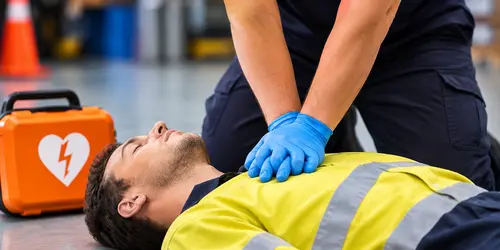
CPR training teaches basic emergency life support. Students practise checking breathing, administering CPR and using an automated external defibrillator (AED).
The two skills are combined because an electric shock may cause cardiac arrest. Once the scene is safe, prompt CPR and AED use can improve a casualty's chance of survival.
What Is Low Voltage?
In Australia, low voltage generally means more than extra-low voltage and up to 1,000 volts AC or 1,500 volts DC.
The UETDRMP018 unit focuses on rescue from a live LV panel. It does not cover every rescue task involving overhead lines or underground cables.
Why Is LVR Training Important?
A rescuer can also suffer an electric shock if they approach an unsafe scene.
LVR training teaches workers how to manage electrical hazards before attempting a rescue. The goal is to protect both the casualty and the rescuer.
These skills help electrical teams prepare for emergencies and support a safer workplace.
Which Units Are Included in the LVR CPR Course?
The combined CPR LVR course covers two nationally recognised units.
- UETDRMP018: Perform rescue from a live low voltage panel.
- HLTAID009: Provide cardiopulmonary resuscitation.
UETDRMP018 – Low Voltage Rescue
This unit covers safe rescue procedures for a live low voltage panel.
Students learn to inspect rescue equipment, assess hazards, follow isolation processes and carry out a simulated LV panel rescue procedure.
UETDRMP018 supersedes UETDRMP007. If your employer refers to an older LVR unit, confirm which current competency you need.
HLTAID009 – CPR Training
HLTAID009 teaches students how to provide CPR and use an AED.
Practical training covers adult and infant CPR, emergency response and relevant Australian Resuscitation Council guidelines.
HLTAID011 Provide First Aid is a separate unit. It is not included in this two-unit LVR CPR course set. If your employer also requires first aid training, ask about the relevant course.
Who Needs LVR CPR Training in Orange?
LVR CPR training suits workers who may need to respond to electrical emergencies.
Common participants include:
- Licensed electricians and electrical contractors
- Electrical apprentices and trainees
- Industrial electricians and maintenance technicians
- Electricity Supply Industry workers
- Electrical safety observers and spotters
- Workers in construction, mining and infrastructure
These roles are found across Orange and the wider Central West NSW region.
Is LVR Training Mandatory in NSW?
Some electrical tasks require workers to maintain rescue and CPR competencies.
The requirements depend on the job, electrical risks and workplace procedures. Not every electrician has identical training needs.
Check with your employer before enrolling. LVR certification does not replace an electrical licence or authorisation to perform live electrical work.
What Practical Skills Will You Learn?
The course combines theory with hands-on practical training.
Approved training partners assess students against the relevant unit requirements. Students must show they can complete the required rescue and CPR tasks.
Electrical Hazard Assessment
Students practise identifying risks before approaching a casualty.
This includes checking the work area, following emergency procedures and knowing when a rescue cannot be attempted safely.
Safe Isolation Procedures
Training covers how to follow authorised isolation procedures and manage electrical hazards.
The main goal is to prevent further contact with live electrical equipment.
Never assume an electrical system is safe simply because a switch appears to be off.
Rescue From a Live Low Voltage Panel
Students practise a simulated rescue from a live LV panel.
The task involves assessing the scene, preparing equipment and following the required rescue procedures to remove a casualty from danger.
The exercise takes place under controlled training conditions, not on an exposed live electrical panel.
Low Voltage Rescue Equipment
An LVR kit may include insulated gloves, an insulated rescue crook, protective equipment and CPR barriers.
Students practise inspecting and positioning rescue equipment before use.
Equipment must suit the electrical hazard and meet workplace safety requirements.
CPR and AED Training
Students learn to recognise cardiac arrest, call Triple Zero (000), administer CPR and use an AED.
They also practise caring for a casualty until emergency services arrive.
DRSABCD Emergency Response
The CPR component covers the DRSABCD action plan.
- D – Danger: Check for hazards.
- R – Response: Check for a response.
- S – Send for help: Call 000.
- A – Airway: Check the airway.
- B – Breathing: Check for normal breathing.
- C – CPR: Provide CPR when needed.
- D – Defibrillation: Use an AED.
Students also learn about the recovery position for an unconscious casualty who is breathing normally.
How Long Does an LVR CPR Course Take?
The course set offers different delivery formats.
- Refresher training: 3 hours and 30 minutes.
- Face-to-face training: 5 hours.
- Online learning with practical assessment: 1 hour, plus online learning.
These are minimum face-to-face contact times, not total course durations.
Can You Complete LVR CPR Training Online?
Some training arrangements include an online component followed by face-to-face practical assessment.
For the course set, online learning and theory assessment are estimated to take three to four hours. Your actual time may vary.
You cannot complete all practical rescue and CPR assessments online.
Is Onsite Training Available?
Workplace training may be available for group bookings through our training network.
Employers in Orange should confirm trainer availability, venue requirements, group numbers and whether onsite delivery can be arranged.
LVR CPR Course Prerequisites
Is CPR a Prerequisite for LVR?
Yes, HLTAID009 is a formal prerequisite for UETDRMP018.
The combined LVR CPR course includes both units. The training provider must ensure the CPR prerequisite is met before issuing the LVR competency.
Do You Need Prior Electrical Experience?
Check the course entry requirements.
Prior experience may help with electrical rescue scenarios. However, an electrical licence is not a universal entry requirement for every combined LVR CPR course.
What Do You Need to Enrol?
Students need to meet the course entry requirements, including:
- Official photo identification
- A Unique Student Identifier (USI), unless exempt
- Suitable language, literacy and numeracy skills
- Digital skills and internet access for online learning
- The physical ability to complete practical rescue and CPR tasks
What Are the Physical Requirements?
Students must be able to complete CPR on a floor-based manikin.
Practical CPR assessment includes at least two minutes of uninterrupted CPR.
Contact the training provider before enrolling if you have concerns about these requirements.
What Happens During the Practical Assessment?
Successful completion requires both knowledge and practical skills.
The course includes:
- Written knowledge questions
- Adult CPR on a floor-based manikin
- Infant CPR assessment
- Inspection and positioning of an LVR kit
- Simulated rescue from a live LV panel
Approved training partners assess students against the required competency standards.
Students must demonstrate competency. Attendance alone does not guarantee certification.
LVR CPR Course Dates, Prices and Locations in Orange
FindTraining helps students access course information through the Allens Training partner network.
Course dates, venue details and fees are shown through the relevant booking arrangements.
The aim is to help you find training that suits your location and schedule while maintaining the same recognised training standards.
Where Is LVR CPR Training Held in Orange?
LVR CPR training may be available through approved training partners serving Orange and the wider Central West NSW region.
Check the current course listing for confirmed training locations and dates.
How Much Does LVR CPR Training Cost?
The course fee depends on the session, delivery arrangement and applicable booking conditions.
A current Orange course price has not been confirmed here.
Check the fee and course details before enrolling.
Are Group Bookings Available?
Employers can enquire about LVR CPR group training for electricians, maintenance teams and other electrical workers.
Our training partners may be able to support group bookings through suitable local delivery arrangements.
Ask about available dates, group numbers, venue needs and onsite training options.
How Often Should You Renew LVR and CPR?
Refresher training is commonly recommended every 12 months.
This is the recommended interval for both UETDRMP018 and HLTAID009.
A Statement of Attainment does not automatically expire after 12 months. Employers may set their own training currency rules.
What Certification Will You Receive?
The LVR CPR course set is delivered and assessed on behalf of Allens Training Pty Ltd, Registered Training Organisation (RTO 90909).
Students who successfully complete all requirements can receive a nationally recognised Statement of Attainment for the units achieved.
LVR CPR Units Include;
- HLTAID009 Provide Cardiopulmonary Resuscitation
- UETDRMP018 Perform rescue from a live low voltage panel
Book an LVR CPR Course in Orange
Need Low Voltage Rescue and CPR training for yourself or your team?
FindTraining connects you with quality training partners delivering nationally recognised courses under Allens Training RTO 90909.
Explore the UETDRMP018 and HLTAID009 course set to find current training options in or near Orange.
Frequently Asked Questions
What Is the Difference Between LVR and CPR?
LVR covers rescue from a live low voltage panel. CPR teaches emergency care for someone who is unresponsive and not breathing normally.
Is LVR CPR Training Nationally Recognised?
Yes, the course set includes UETDRMP018 and HLTAID009. Students who pass all assessments and meet the course requirements can receive a nationally recognised Statement of Attainment.
Who Delivers LVR CPR Training Through FindTraining?
Training is delivered and assessed by approved training partners working on behalf of Allens Training Pty Ltd, RTO 90909, for the course set. Partners operate under the RTO's applicable training and assessment standards.
Are All Allens Training Partners Held to the Same Standards?
Yes. Approved partners delivering nationally recognised courses on behalf of Allens Training must follow the same applicable RTO requirements and unit competency standards.
Our network helps students access consistent training standards through quality trainers in different locations.
Can Electrical Apprentices Complete LVR CPR Training?
Apprentices may enrol if they meet the entry requirements. They should confirm which units their employer needs.
Does LVR CPR Include First Aid?
The course includes HLTAID009 CPR but not HLTAID011 Provide First Aid.
Can LVR CPR Be Completed Entirely Online?
No, theory may be available online, but practical CPR and LV rescue assessments require face-to-face attendance.
Does LVR Training Authorise Live Electrical Work?
No, LVR training develops rescue skills. It does not replace an electrical licence or other required authorisation.
How Often Should I Renew LVR CPR?
Refresher training is commonly recommended every 12 months. Confirm your employer's requirements.
Can I Arrange Group LVR CPR Training in Orange?
Group training may be available through our training partners. Enquire about suitable dates, minimum numbers and onsite delivery options.