
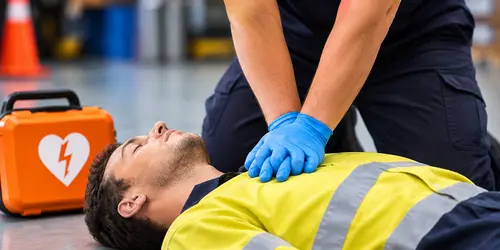
LVR CPR Course Maitland - Low Voltage Rescue & CPR Training
Looking for an LVR CPR course in Maitland? Low Voltage Rescue (LVR) and CPR training prepares electrical workers to respond to emergencies involving live low-voltage panels. The course covers electrical hazards, safe rescue procedures and cardiopulmonary resuscitation (CPR).
The course includes two nationally recognised units: UETDRMP018 Perform rescue from a live low voltage panel and HLTAID009 Provide cardiopulmonary resuscitation. Students learn to assess hazards, use rescue equipment, carry out a simulated rescue and provide CPR.
LVR CPR training is often required for licensed electricians, electrical apprentices, maintenance workers and electrical safety observers. Many employers require refresher training every 12 months to keep these skills current.
FindTraining connects Maitland workers and businesses with a broad network of quality training providers. Approved training partners deliver courses under the standards of Allens Training Pty Ltd, RTO 90909. This gives students access to nationally recognised training through local and regional delivery options. Check the course listing for confirmed venues, dates and availability.
Featured Venues

54 CESSNOCK ROAD
WESTON, NEW SOUTH WALES, 2326

5/ 10 KENNINGTON DRIVE
TOMAGO, NEW SOUTH WALES, 2322
5/ 10 KENNINGTON DRIVE
TOMAGO, NEW SOUTH WALES, 2322
Featured Providers

Search for Specific Delivery Mode
54 CESSNOCK ROAD
WESTON, NEW SOUTH WALES, 2326
5/ 10 KENNINGTON DRIVE
TOMAGO, NEW SOUTH WALES, 2322
5/ 10 KENNINGTON DRIVE
TOMAGO, NEW SOUTH WALES, 2322
Other Training Options


What Is LVR CPR Training?
An LVR CPR course teaches workers how to rescue someone from a live low-voltage panel and respond to a medical emergency.
Low voltage rescue training focuses on the risks of working near live electrical equipment. Workers learn to assess the area, find isolation points and follow safe rescue procedures.
The aim is to protect both the casualty and the rescuer. A worker must not touch someone who is still in contact with a dangerous electrical source.
CPR training covers how to assess an unconscious person, provide cardiopulmonary resuscitation and use an automated external defibrillator (AED).
Electrical shock can cause serious injuries and cardiac arrest. This is why low voltage rescue and CPR training are often taught together.
What Does an LVR CPR Course Cover?
Students learn how to:
- Identify hazards around live low-voltage electrical systems.
- Assess risks to themselves and other workers.
- Locate electrical isolation points.
- Inspect and prepare insulated rescue equipment.
- Follow an LV panel rescue procedure.
- Safely remove a casualty during a simulated rescue.
- Use the DRSABCD emergency action plan.
- Perform CPR and use an AED.
- Contact emergency services.
- Report an electrical incident.
The course combines theory and hands-on practical training. Approved training partners follow the relevant nationally recognised training and assessment requirements.
Which Units Are Included in an LVR CPR Course?
A combined CPR LVR course normally includes UETDRMP018 and HLTAID009.
UETDRMP018 Perform Rescue from a Live Low Voltage Panel
This unit covers rescue from live LV electrical equipment.
Students learn to prepare for an emergency, assess electrical hazards and inspect rescue equipment. They also practise removing a casualty from a simulated live low-voltage panel.
Training includes electrical isolation, protective equipment, rescue procedures and incident reporting.
UETDRMP018 replaced UETDRMP007. That unit had previously replaced UETDRRF004.
The unit does not cover rescue from overhead lines or underground cables. These settings involve different hazards and may require other training.
HLTAID009 Provide Cardiopulmonary Resuscitation
HLTAID009 covers how to recognise a medical emergency and provide CPR.
Students learn to check breathing, perform chest compressions and rescue breaths, and use an AED.
CPR training follows the relevant Australian Resuscitation Council guidelines.
Students also learn how to help an unconscious person who is breathing normally. This may include placing the person in the recovery position when safe and suitable.
Does the Course Include HLTAID011 Provide First Aid?
Not always.
HLTAID009 covers CPR. HLTAID011 Provide First Aid covers a wider range of medical emergencies and first aid skills.
Some training programs include additional first aid units. Check the course details if your workplace requires HLTAID011.
Who Needs LVR CPR Training in Maitland?
LVR training is designed for workers who may need to respond to an electrical emergency.
It is often relevant to:
- Licensed electricians and electrical contractors.
- Electrical apprentices.
- Industrial maintenance workers.
- Electrical supply industry workers.
- Telecommunications technicians who face electrical risks.
- Construction and infrastructure workers.
- Electrical safety observers and spotters.
- Supervisors responsible for electrical safety.
Electrical workers can face risks when installing, testing or maintaining electrical systems.
In Maitland and the Hunter region, LVR CPR training may support safety procedures across construction, industrial and maintenance workplaces.
Is LVR Training Mandatory for Electricians in NSW?
The rules depend on the work being done.
Some electrical tasks need a trained safety observer or specific emergency plans. Employers may require workers to hold current LVR and CPR training before carrying out these tasks.
However, not every electrician in NSW must renew LVR training each year as a condition of their electrical licence.
Check the rules for your workplace and the duties you perform.
Do Electrical Apprentices Need LVR CPR Training?
Some apprentices need LVR CPR training as part of their workplace safety requirements.
The course teaches safe rescue methods and basic emergency response skills.
It does not allow an apprentice to perform electrical work outside their approved duties or supervision arrangements.
What Are the Prerequisites for LVR CPR Training?
HLTAID009 Provide cardiopulmonary resuscitation is the formal prerequisite for UETDRMP018.
A combined course may allow students to complete CPR training before starting the LVR assessment.
Students may also need photo ID, a Unique Student Identifier (USI) and the ability to complete practical tasks.
Do You Need an Electrical Licence?
An electrical licence is not listed as the formal prerequisite for UETDRMP018.
However, your employer or site may require a licence, other units or prior electrical experience for certain work.
Always check the course entry rules and your workplace requirements.
Language, Numeracy and Physical Requirements
Students need enough reading, writing and numeracy skills to follow safety instructions.
They must be able to recognise warning signs, understand basic electrical information and complete assessment questions.
Students also need the physical ability to perform CPR and take part in rescue tasks.
If you have an injury, disability or medical concern, contact the training provider before enrolling. Ask about the assessment requirements and available support.
What Is Included in Your LVR CPR Training?
The combined course brings together two nationally recognised units, with theory and practical assessment.
Depending on the course arrangement, training includes:
- UETDRMP018 low voltage rescue training.
- HLTAID009 CPR training.
- Required learning materials.
- Practical rescue training and assessment.
- Access to rescue equipment and CPR manikins during training.
- A Statement of Attainment after successful completion and satisfaction of all requirements.
The course listing provides the relevant fee, training schedule and enrolment details.
Where Can You Complete LVR CPR Training Near Maitland?
FindTraining provides access to a large network of local training partners, helping students find quality training in their area.
Workers from Maitland, East Maitland, Rutherford, Thornton and nearby suburbs can access relevant local and regional course information through FindTraining.
Training may take place at a training facility or through a workplace group arrangement where available.
Check the course listing for the confirmed venue, training date and any parking or access information.
How Often Do You Need to Renew LVR and CPR Training?
Many electrical workplaces require workers to refresh LVR and CPR training every 12 months.
Regular training helps workers maintain rescue skills and remember how to respond to an emergency.
The recommended renewal is every 12 months for both UETDRMP018 and HLTAID009.
Does an LVR Certificate Expire?
A nationally recognised Statement of Attainment does not automatically expire after 12 months.
However, your employer may require recent training. An older certificate may not meet the site's rules for current competency.
Check when you last completed training and when your employer expects you to renew it.
What If Your LVR CPR Training Is Out of Date?
You may need refresher training before returning to work that requires current LVR and CPR skills.
Check the rules before booking. Your employer may require both units or a specific course format.
What Practical Skills Are Assessed in LVR CPR Training?
Students must show they can follow rescue procedures and respond to an electrical emergency.
The nationally recognised assessment requirements apply across approved training partners delivering the course on behalf of Allens Training.
Assessment includes theory questions and hands-on tasks.
1. Assess Electrical Hazards
Students learn to find hazards around a live LV panel.
They assess the risks to the casualty, rescuer and people nearby. They must choose suitable controls before starting a rescue.
The main goal is to avoid further injury.
2. Identify Electrical Isolation Points
Students learn to identify where electrical power can be isolated.
Safe isolation is a key part of an LV panel rescue procedure.
Workers must follow the relevant workplace rules. They should never assume equipment is safe to touch.
3. Inspect Low Voltage Rescue Equipment
Students learn how to check and prepare an LVR rescue kit.
A kit may include:
- An insulated rescue hook.
- Insulating gloves.
- An insulating mat.
- Protective or warning equipment.
- Emergency instructions.
The contents depend on the kit and workplace needs.
Rescue equipment must be suitable for the task and kept in safe working condition.
4. Perform a Simulated Rescue from a Live LV Panel
Students practise the steps used to rescue a casualty from a live low-voltage panel.
They assess the danger, prepare the equipment and follow the rescue procedure.
Training takes place in a controlled setting. Students are not required to rescue someone from an actually energised panel.
5. Perform CPR on an Adult Manikin
Students must perform at least two minutes of uninterrupted single-rescuer CPR on an adult manikin placed on the floor.
They must show the correct use of chest compressions and rescue breaths.
Assessment also covers AED use and safe handover to emergency services.
6. Perform Infant CPR
Students must also perform at least two minutes of uninterrupted CPR on an infant manikin placed on a firm surface.
Infant CPR uses a different technique from adult CPR. Students must show they can use the correct method.
7. Respond to an Unconscious Casualty
Students learn to assess a casualty who is unconscious but breathing normally.
They practise ways to protect the airway, including the recovery position when suitable.
If the person is unresponsive and not breathing normally, CPR should begin once it is safe to provide care.
How Does DRSABCD Apply to Electrical Emergencies?
DRSABCD is the emergency action plan used in Australian first aid and CPR training.
- Danger: Check for electrical hazards. Do not approach an unsafe casualty.
- Response: Check whether the casualty responds.
- Send for help: Call 000 or ask someone else to call.
- Airway: Check and open the airway.
- Breathing: Check for normal breathing.
- CPR: Start CPR when required.
- Defibrillation: Use an AED as soon as one is available.
Electrical safety must come first.
Do not touch a casualty who is still in contact with a dangerous electrical source. Follow the correct rescue procedure before giving CPR.
How Long Does an LVR CPR Course Take?
Course length depends on the delivery pathway.
Some courses take place in a classroom. Others combine online learning with practical assessment.
This course set has these minimum face-to-face times:
- Refresher course: 3 hours and 30 minutes.
- Face-to-face course: 5 hours.
- Online learning with face-to-face assessment: 1 hour of face-to-face assessment.
These are minimum times for the listed pathways. They do not include all possible online study or preparation time.
Check the course schedule before booking.
Can You Complete LVR CPR Training Fully Online?
No, students must complete practical assessments in person.
Online training may cover theory, rescue procedures and electrical safety.
Students must still show they can perform CPR, use an AED, inspect rescue equipment and complete a simulated LV panel rescue.
What Should You Bring to an LVR CPR Course?
The course information will confirm what you need.
Common items include:
- Photo identification.
- Your Unique Student Identifier.
- Suitable clothing and enclosed footwear.
- A device and internet access for online learning.
- Any documents requested before training.
Be prepared for hands-on work. CPR assessment requires physical tasks, including performing compressions on a manikin.
Will You Receive a Nationally Recognised Certificate?
Students who pass the required assessments and meet all course requirements receive a nationally recognised Statement of Attainment for the units completed.
This records the skills and knowledge they have shown during assessment.
Training and assessment for this course set are delivered on behalf of Allens Training Pty Ltd, Registered Training Organisation (RTO 90909).
Allens Training works with a network of approved training partners. They operate under its training and assessment requirements, giving students access to a consistent nationally recognised training framework across participating locations.
Can Maitland Businesses Arrange Onsite LVR CPR Training?
Onsite training may suit businesses with several workers who need LVR CPR skills.
Through its training partner network, FindTraining can help businesses enquire about suitable group training arrangements.
Availability depends on group size, the proposed location, equipment needs and training partner capacity.
Employers can provide:
- The number of students.
- The units required.
- Preferred training dates.
- The proposed training location.
All group training must meet the required nationally recognised assessment standards.
Book LVR CPR Training Near Maitland
FindTraining connects Maitland workers and businesses with a large network of quality training partners. The network helps students access nationally recognised LVR and CPR training through convenient local and regional delivery options.
With approved Allens Training partners working under the same RTO standards, you can focus on finding a suitable course date and location.
Whether you need initial LVR training or a 12-month refresher, check the current course details and enrolment requirements.