
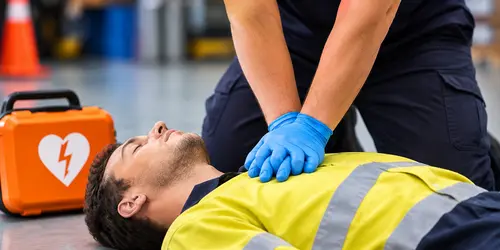
LVR CPR Course Bathurst - Low Voltage Rescue & CPR Training
Looking for an LVR CPR course in Bathurst? FindTraining connects electricians, apprentices and electrical workers with a large network of quality local training partners. Learn how to respond to electrical emergencies, perform a simulated rescue from a live low voltage panel and provide CPR.
Combined LVR CPR training includes two nationally recognised units: UETDRMP018 Perform rescue from a live low voltage panel and HLTAID009 Provide cardiopulmonary resuscitation. The course covers safe rescue procedures, power isolation, rescue equipment, CPR and automated external defibrillator (AED) use.
Training is delivered through approved partners working under the standards of Allens Training Pty Ltd, RTO 90909. This means students can access consistent training and assessment standards through our local trainers. The course is suited to licensed electricians, apprentices, maintenance workers and people in the electrical supply industry.
Find LVR CPR training in Bathurst and the surrounding Central West region. Explore local course dates, training locations and enrolment options. Annual refresher training is generally recommended for LVR and CPR, and practical assessment must be completed in person.
Featured Venues

132 PIPER STREET
BATHURST, NEW SOUTH WALES, 2795
132 PIPER STREET
BATHURST, NEW SOUTH WALES, 2795
Featured Providers


Search for Specific Delivery Mode
132 PIPER STREET
BATHURST, NEW SOUTH WALES, 2795
132 PIPER STREET
BATHURST, NEW SOUTH WALES, 2795
Other Training Options


Central West First Aid Training Specialists Pty Ltd
Panther's Bathurst
What Is an LVR CPR Course?
An LVR CPR course combines Low Voltage Rescue training with cardiopulmonary resuscitation training.
LVR teaches workers how to respond when someone comes into contact with live low voltage electrical equipment. Training covers hazard assessment, safe isolation procedures and the controlled removal of a casualty from danger.
CPR training teaches participants how to recognise cardiac arrest, administer CPR and use an AED.
An electric shock can cause cardiac arrest. This is why low voltage rescue and CPR training are commonly delivered together.
The course combines theory with hands-on practice. Workers develop the skills needed to respond to electrical emergencies while reducing risks to themselves and others.
What Is Considered Low Voltage?
In Australia, low voltage generally means electrical systems above extra-low voltage and up to 1,000 volts AC or 1,500 volts DC.
However, this course focuses on rescue from a live LV panel. It does not cover all electrical rescue situations, including those involving overhead lines, underground cables or high voltage equipment.
Nationally Recognised LVR and CPR Units
The combined LVR CPR course includes two nationally recognised units of competency.
UETDRMP018 Perform Rescue From a Live Low Voltage Panel
UETDRMP018 Perform Rescue From a Live Low Voltage Panel covers the skills needed to prepare for and perform a safe electrical rescue.
Participants learn to:
- Identify electrical hazards and assess risks.
- Locate the electrical isolation point.
- Inspect low voltage rescue equipment.
- Follow workplace emergency procedures.
- Perform a simulated LV panel rescue.
- Assess the casualty and secure the area.
- Complete incident reporting.
UETDRMP018 is the unit included in the Allens Training combined course. Workers who hold an older LVR unit should check which current unit their employer requires.
HLTAID009 Provide Cardiopulmonary Resuscitation
HLTAID009 Provide cardiopulmonary resuscitation teaches participants to recognise cardiac arrest, perform CPR and use an AED.
Training includes adult and infant CPR, DRSABCD and Australian Resuscitation Council guidelines.
Students who successfully complete both units can receive a nationally recognised Statement of Attainment.
Does LVR CPR Include a First Aid Course?
The standard combined course includes UETDRMP018 and HLTAID009.
HLTAID011 Provide First Aid and HLTAID010 Provide basic emergency life support are separate units. They are not automatically included.
If your workplace requires broader first aid training, check whether you need an additional course.
Who Needs LVR CPR Training in Bathurst?
LVR CPR training supports electrical safety for workers who may need to respond to a live low voltage emergency.
Common participants include:
- Licensed electricians and electrical contractors.
- Electrical apprentices and trainees.
- Industrial electricians and maintenance workers.
- Electrical safety observers and spotters.
- Electricity supply industry personnel.
- Electrical construction and infrastructure workers.
- Supervisors responsible for workplace safety.
The course may also suit workers in mining, manufacturing and utilities where electrical rescue skills are needed.
Is LVR CPR Training Mandatory in NSW?
LVR and CPR training may be required for certain electrical tasks or workplace roles.
NSW workplace safety laws require electrical risks to be managed. Employers must also have suitable emergency response procedures.
However, LVR certification is not a universal condition for holding an electrical licence.
Check your workplace's training requirements before enrolling. Completing LVR training does not authorise you to perform electrical work outside your licence or qualifications.
LVR CPR Course Prerequisites
The specified prerequisite for UETDRMP018 is HLTAID009 Provide cardiopulmonary resuscitation.
A combined course may allow students to complete both units through an approved training and assessment process.
Student Entry and Physical Requirements
Students may need photo identification, a Unique Student Identifier (USI) and evidence of any required prerequisite.
They must also have the reading, writing, numeracy and digital skills needed to follow safety instructions and complete assessments.
The course includes physical activities. Participants must demonstrate a simulated rescue and perform CPR on a manikin placed on the floor.
If you have concerns about physical fitness or mobility, contact the training provider before enrolling. Ask about the practical assessment and reasonable adjustments.
LVR CPR Course Cost in Bathurst
The cost of LVR CPR training depends on the course format, location and any extra training requirements.
FindTraining helps students access nationally recognised LVR and CPR courses through approved local training partners.
Allens Training partners follow the same training and assessment standards. The focus is on helping you access suitable local training, not comparing the quality of individual trainers.
Course fees are shown through the relevant booking options. Before enrolling, check:
- The units included in the course.
- Whether you need initial or refresher training.
- Online learning and face-to-face requirements.
- The confirmed training location and date.
- Any additional course or assessment requirements.
This helps you book the training your workplace needs without having to assess the quality of individual partners.
LVR CPR Training Locations in Bathurst
FindTraining connects students with approved training partners who serve Bathurst and the surrounding Central West region.
Local training arrangements depend on scheduled sessions and venue availability.
FindTraining's partners make it easier to access recognised training close to home or work while maintaining the training standards set by Allens Training.
How Often Do You Need to Renew LVR and CPR Training?
Annual refresher training is generally recommended for LVR and CPR.
The Australian Resuscitation Council recommends refreshing CPR skills at least every 12 months.
Many electrical employers also require annual LVR refresher training to help workers maintain safe rescue procedures.
A nationally recognised Statement of Attainment does not automatically expire after 12 months. However, workplace rules may require recent training.
Check your last training date and any renewal requirements that apply to your work.
Regular training helps workers maintain practical skills and respond effectively during electrical emergencies.
What Will You Learn in Low Voltage Rescue Training?
LVR training combines hazard assessment, safe isolation and practical rescue procedures.
The aim is to safely rescue a casualty while reducing the risk to the rescuer and others.
Electrical Hazard Assessment and Safe Isolation
Before attempting a rescue, workers must identify hazards and assess the risks.
Training covers how to:
- Identify live electrical hazards.
- Manage risks to rescuers and bystanders.
- Locate the power isolation point.
- Check rescue equipment and protective gear.
- Follow the workplace emergency response plan.
Isolating the electrical supply is a key safety step.
If power cannot be isolated at once, workers must follow their trained rescue procedure. They must avoid unsafe contact with live electrical parts.
What Is the LV Panel Rescue Procedure?
A simulated LV panel rescue procedure includes:
- Check for danger. Identify electrical hazards.
- Raise the alarm. Arrange emergency assistance.
- Locate the isolation point. Isolate power where safe and possible.
- Prepare rescue equipment. Check the required gear.
- Perform the rescue. Move the casualty using the trained method.
- Provide first aid. Assess the casualty and start CPR if needed.
- Secure the area. Keep others safe and report the incident.
These steps are part of training. They do not replace site-specific emergency procedures.
Low Voltage Rescue Kits and Equipment
An LVR kit may include:
- An insulated rescue hook or crook.
- Insulated gloves.
- A fire-resistant blanket.
- A CPR mask or face shield.
- Other suitable protective equipment.
Students learn to inspect and use rescue equipment during practical training.
The Role of an Electrical Safety Observer
A safety observer, or spotter, monitors electrical work for hazards.
The observer may need to raise the alarm and activate rescue procedures if an incident occurs.
Some roles require current LVR and CPR training. Exact duties depend on the task and workplace safety rules.
CPR Training and Emergency Response
The CPR component teaches workers how to assess a casualty and respond to cardiac arrest.
Training follows the DRSABCD action plan:
- D – Danger: Check for hazards.
- R – Response: Check if the casualty responds.
- S – Send for help: Call 000.
- A – Airway: Open and check the airway.
- B – Breathing: Check for normal breathing.
- C – CPR: Start CPR if required.
- D – Defibrillation: Use an AED as soon as one is available.
Students practise chest compressions and rescue breaths. Adult CPR uses 30 compressions followed by two breaths.
Training also covers AED use and the recovery position where it is safe and appropriate.
Prompt CPR and defibrillation can improve the chance of survival after cardiac arrest.
How Long Does an LVR CPR Course Take?
Course duration depends on the delivery method.
The combined course set has these minimum face-to-face times:
- Standard face-to-face: 5 hours.
- Eligible refresher: 3 hours and 30 minutes.
- Online with face-to-face assessment: 90 minutes, plus online study.
For the blended option, the listed online learning and theory assessment typically take 3–4 hours. The actual time depends on each learner's experience and pace.
These are minimum contact times. More training or assessment time may be needed.
Can You Complete LVR CPR Training Online?
No the entire course cannot be completed online.
Online learning may cover theory and knowledge questions, but students must demonstrate practical rescue and CPR skills in person.
Training may take place at a local venue or suitable workplace, subject to the available course arrangements.
LVR CPR Practical Assessment Requirements
Students must demonstrate both theory and hands-on skills.
Assessment may include:
- Checking rescue equipment.
- Identifying hazards and isolation points.
- Performing a simulated rescue from a live LV panel.
- Following emergency response procedures.
- Performing adult and infant CPR.
- Using an AED training device.
- Completing written knowledge questions.
Two Minutes of Uninterrupted CPR
For HLTAID009, students must perform at least two minutes of uninterrupted single-rescuer CPR on an adult manikin placed on the floor.
This includes the required chest compressions and rescue breaths.
Nationally Recognised Training Through Allens Training
FindTraining connects students with a network of approved local trainers who deliver nationally recognised courses under the standards of Allens Training Pty Ltd, RTO 90909.
For this combined LVR CPR course, enrolment is with Allens Training. Approved partners may deliver training and assessment on its behalf.
Students who successfully complete all required assessments can receive a nationally recognised Statement of Attainment for the units achieved.
Attendance alone does not guarantee competency.
Group and Onsite LVR CPR Training in Bathurst
Businesses can enquire about group bookings and onsite LVR CPR training for electrical workers in Bathurst.
FindTraining's training partners help employers access quality training for their teams.
Group training may help businesses organise refresher dates and support workplace safety.
When enquiring, confirm participant numbers, required units, preferred training dates and any completed prerequisites.
Onsite training may be available at suitable workplaces, subject to the partner's delivery arrangements and assessment needs.
Frequently Asked Questions About LVR CPR Courses in Bathurst
What units are included in LVR CPR training?
LVR CPR training includes units: UETDRMP018 Perform rescue from a live low voltage panel, and HLTAID009 Provide cardiopulmonary resuscitation.
Can electrical apprentices complete LVR CPR training?
Yes, apprentices can complete LVR CPR Training, if they meet the entry requirements. Training may be relevant to apprentices who have electrical rescue duties.
Do I need an electrical licence to enrol?
An electrical licence is not a universal prerequisite for UETDRMP018. Some employers or training programs may require other electrical qualifications or experience.
How often should LVR CPR training be renewed?
Annual refresher training is generally recommended. Many employers require workers to refresh both units every 12 months.
Does an LVR CPR course include HLTAID011 First Aid?
No, LVR CPR does not include HLTAID011. Provide First Aid is included in our LVR First Aid Course Set
Can LVR CPR training be completed fully online?
No, practical rescue and CPR assessments must be completed in person.
Do all FindTraining partners follow the same training standards?
Approved training partners delivering this nationally recognised course on behalf of Allens Training Pty Ltd, RTO 90909, work under its training and assessment standards. FindTraining helps students access quality training from partners in their local area.
Do I need my own LVR rescue kit?
Training partners generally arrange rescue equipment for practical training. Check your booking details for any items you need to bring.
Does LVR certification allow me to perform live electrical work?
No, LVR CPR training does not replace electrical licensing or workplace authorisation.
Find an LVR CPR Course in Bathurst
Whether you need initial training or an annual refresher, FindTraining connects you with a large network of quality, local training partners.
Access LVR CPR training in Bathurst through local trainers delivering under Allens Training's nationally recognised training and assessment standards.
The combined course covers UETDRMP018 and HLTAID009, with practical training in electrical live rescue and CPR.
Find a local course, check the session details and take the next step towards completing your training.