
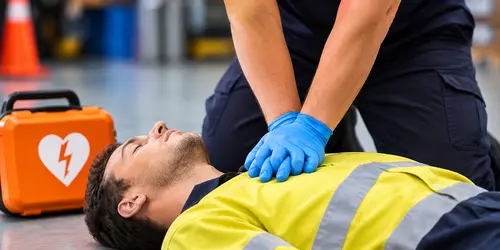
LVR CPR Course Dubbo - Low Voltage Rescue Training
Looking for an LVR CPR course in Dubbo? FindTraining connects electricians, apprentices and electrical workers with a trusted network of local training partners. Our nationally recognised Low Voltage Rescue (LVR) and CPR training covers UETDRMP018 Perform rescue from a live low voltage panel and HLTAID009 Provide cardiopulmonary resuscitation.
LVR training teaches workers to assess electrical hazards, safely isolate power and rescue a casualty from a live low voltage panel. CPR training covers the DRSABCD action plan, chest compressions, rescue breaths and use of an automated external defibrillator (AED). Both units build practical skills for electrical emergencies.
The course suits licensed electricians, apprentices, maintenance workers and Electricity Supply Industry (ESI) personnel. It helps workers respond effectively while protecting themselves and others. Employers may require current LVR and CPR training for certain electrical tasks and high-risk environments.
Find LVR CPR training in Dubbo through FindTraining's network of quality training partners. Our approved FindTraining partners follow consistent training and assessment standards, giving students access to nationally recognised training close to home or work. Students who meet all course requirements receive a Statement of Attainment for the units achieved.
Featured Venues

31-37 MACQUARIE STREET
DUBBO, NEW SOUTH WALES, 2830
31-37 MACQUARIE STREET
DUBBO, NEW SOUTH WALES, 2830
Featured Providers
Search for Specific Delivery Mode
31-37 MACQUARIE STREET
DUBBO, NEW SOUTH WALES, 2830
31-37 MACQUARIE STREET
DUBBO, NEW SOUTH WALES, 2830
Other Training Options


What Is Included in LVR CPR Training?
The LVR CPR course combines two nationally recognised units covering electrical rescue and cardiopulmonary resuscitation.
- UETDRMP018 Perform rescue from a live low voltage panel: Assess hazards, inspect rescue equipment, follow isolation processes and perform rescue procedures.
- HLTAID009 Provide cardiopulmonary resuscitation: Recognise cardiac arrest, administer CPR, use an AED and follow Australian Resuscitation Council guidelines.
Low voltage rescue training focuses on emergencies involving live LV panels. Workers learn to assess site hazards and follow safe rescue procedures.
The course also covers how to remove a casualty using suitable protective equipment. It does not cover rescue from overhead lines or underground cables.
A general first aid course offers broader emergency care skills. The CPR LVR course focuses on electrical rescue and CPR. HLTAID011 Provide First Aid is not included in the two-unit program.
Who Needs LVR CPR Training in Dubbo?
LVR CPR training is designed for people who may need to rescue a worker from live low-voltage electrical equipment.
The course is relevant to:
- Licensed electricians and electrical contractors.
- Electrical apprentices and maintenance workers.
- Workers in the Electricity Supply Industry.
- Construction and industrial workers exposed to electrical hazards.
- Safety observers or spotters who need rescue skills.
Training helps workers manage electrical emergencies and supports a proactive workplace safety culture.
Is LVR CPR Training Mandatory in NSW?
LVR and CPR training may be required under employer policies, workplace safety rules or specific industry requirements.
NSW employers must manage electrical risks and provide workers with suitable training. However, there is no single rule that makes the same LVR course mandatory for every electrician.
Some workplaces require annual evidence of rescue and CPR competency. Check your employer's rules before booking.
What Are the Prerequisites for LVR CPR?
HLTAID009 Provide cardiopulmonary resuscitation is the formal prerequisite for UETDRMP018.
The combined course covers both units. Ask your training partner how the prerequisite is managed before enrolment.
Some training pathways may require prior experience, an electrical licence or relevant industry qualifications. These are not universal entry requirements for every combined course.
For LVR CPR, students also need photo identification, suitable literacy and numeracy skills, basic digital skills and the physical ability to complete practical assessment.
LVR CPR Course Cost and Training Locations in Dubbo
FindTraining makes it easier to access quality LVR CPR training through local training partners.
Course fees, available dates and venue arrangements are provided through the relevant course listing or booking process.
How Much Does an LVR CPR Course Cost in Dubbo?
The total cost depends on the course delivery arrangements and booking requirements.
Check the current course fee before enrolling. The booking details should also show any additional requirements that may affect your training.
For businesses arranging group bookings, workplace delivery may be available through a local training partner. Ask about group training costs, scheduling and any equipment or site requirements.
Where Can I Attend LVR CPR Training in Dubbo?
FindTraining connects students with training partners serving Dubbo and the surrounding Central West NSW region.
Our network gives students access to nationally recognised training without having to search for individual trainers.
Available venues and sessions depend on local training arrangements. Check the course listing for current dates and locations before booking.
Whether you're an individual electrician needing a refresher or a business training several workers, FindTraining helps connect you with a suitable local training option.
How Often Should You Renew LVR and CPR?
It’s recommended to refresh both LVR and CPR training every 12 months.
- UETDRMP018 Low Voltage Rescue: Recommended renewal every 12 months.
- HLTAID009 CPR: Recommended renewal every 12 months.
Regular refresher training helps electrical workers maintain their rescue procedures and CPR skills.
A Statement of Attainment does not automatically expire after 12 months. However, employers and industry rules may require proof of recent training.
If your last course was over a year ago, check your workplace requirements before returning to duties that need current LVR competency.
Practical Skills Covered in Low Voltage Rescue Training
LVR training combines theory and hands-on practice. Students learn to manage electrical hazards and perform a safe rescue from a live low voltage panel.
Training covers hazard assessment, isolation processes, rescue equipment and emergency response.
How Does an LV Panel Rescue Procedure Work?
A typical LV panel rescue procedure includes six key stages:
- Identify danger: Assess electrical hazards and follow workplace safety procedures.
- Isolate power: Locate the isolation point and disconnect electricity where safe and required.
- Check rescue equipment: Inspect protective equipment and prepare the LV rescue kit.
- Perform rescue: Remove the casualty using approved rescue methods without placing yourself at risk.
- Provide emergency care: Contact emergency services, check the casualty and provide CPR or AED support when required.
- Secure and report: Control access to the area and complete workplace incident reports.
Students practise these steps during simulated electrical emergencies.
The goal is to safely rescue a casualty while reducing risks to the rescuer. Actual rescue actions must follow site-specific procedures and safety controls.
What Equipment Is Used in Low Voltage Rescue?
An LVR kit may include:
- An insulated rescue hook or crook.
- Insulating gloves.
- A fire-resistant blanket.
- A CPR mask.
Students learn to inspect and use rescue equipment during a simulated live LV panel rescue.
Equipment must suit the electrical hazard and workplace requirements. Damaged or unsuitable equipment must not be used.
What Is the Role of an Electrical Safety Spotter?
An electrical safety observer or spotter may monitor work and respond if an electrical incident occurs.
The role may include raising the alarm and starting emergency procedures.
LVR CPR training builds useful rescue skills. However, course completion does not automatically authorise someone to act as a spotter. Employers must confirm the required training and competency.
CPR Skills and Emergency Response Training
The CPR component teaches students to recognise cardiac arrest and provide basic emergency life support.
Participants learn to:
- Follow the DRSABCD action plan.
- Check breathing and responsiveness.
- Contact emergency services.
- Provide CPR using chest compressions and rescue breaths.
- Use an automated external defibrillator.
- Place a breathing casualty in the recovery position when appropriate.
- Continue care until help arrives, within their training.
Electrical shock can cause serious injury and cardiac arrest. Early CPR and defibrillation can improve survival chances.
CPR training follows Australian Resuscitation Council guidelines. Students also learn why electrical hazards must be controlled before touching a casualty.
LVR CPR Course Duration and Delivery Options
Course duration depends on the training format.
These are minimum face-to-face contact times:
- Standard practical training: 5 hours.
- Refresher training: 3 hours and 30 minutes.
- Online learning with practical assessment: 1 hour of face-to-face training, plus online study.
These are minimum contact times, not guaranteed total course durations.
Can I Complete LVR CPR Training Online?
The course may include online learning followed by face-to-face assessment.
FindTraining estimates 3-4 hours for the online component of its blended course. Actual study time varies with prior experience and learning needs.
Online training covers theory and preparation. Students must still demonstrate their practical skills in person.
You cannot complete an LVR CPR course entirely online. Hands-on electrical rescue and CPR assessment are required.
LVR CPR Assessment and Physical Requirements
Students must pass written and practical assessments to complete the course.
FindTraining's listed assessment activities include:
- Adult and infant CPR.
- Inspection and positioning of an LVR kit.
- A simulated rescue from a live LV panel.
- Written theory questions.
What Are the CPR Physical Requirements?
Students must perform at least two minutes of uninterrupted CPR on an adult manikin placed on the floor.
This includes five cycles of 30 chest compressions and two rescue breaths.
Students must also have the physical fitness and mobility needed to complete the rescue tasks safely.
Attendance alone does not guarantee successful completion. Speak with your training partner before enrolling if you have concerns about the physical requirements.
Nationally Recognised LVR CPR Certification
After successful completion, eligible students receive a nationally recognised Statement of Attainment for the units achieved:
- UETDRMP018 Perform rescue from a live low voltage panel.
- HLTAID009 Provide cardiopulmonary resuscitation.
For courses delivered through the Allens Training network, enrolment is with Allens Training Pty Ltd, Registered Training Organisation (RTO 90909).
Our network gives students access to local trainers who work within the same nationally recognised training framework.
Your Statement of Attainment records your achieved units. It does not replace an electrical licence or automatically authorise specific electrical work.
Book LVR CPR Training in Dubbo
Need a CPR and low voltage rescue refresher or training for your electrical team?
FindTraining connects you with a trusted network of quality training partners in your local area. Whether you're booking for yourself or organising training for a workplace, you can access nationally recognised LVR and CPR training.
Check the course details for current dates, locations and enrolment requirements.
For group bookings, ask about workplace delivery, scheduling and equipment needs. Availability depends on local training arrangements.