
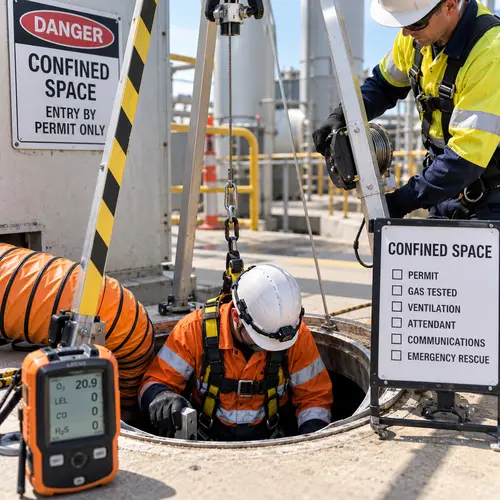
RIIWHS202E - Enter and work in confined spaces Townsville
RIIWHS202E Enter and Work in Confined Spaces is a nationally recognised unit designed for people who need to enter and work in confined spaces as part of their job. The course is relevant to workers in construction, civil infrastructure, utilities, maintenance, manufacturing, transport, mining and resources-support industries where confined space hazards may be present.
Participants learn how to identify confined spaces, recognise hazards, interpret workplace procedures and entry permits, select suitable PPE and prepare for safe entry. Training can also cover atmospheric monitoring, communication, entry and exit procedures and responding to changing conditions while work is being carried out.
Confined Space training is particularly relevant across Townsville's construction, industrial, utilities, transport and resources sectors. Workers may encounter confined spaces in tanks, pits, pipes, drains, sewers, ducts, vessels and processing infrastructure. Townsville also supports mining, manufacturing and freight activity across North Queensland, creating demand for workers with practical confined space competencies.
FindTraining can help you compare available RIIWHS202E Confined Space courses in Townsville by provider, venue, date and delivery format. Enrolment for nationally recognised training listed through the Allens Training network is with Allens Training Pty Ltd RTO 90909, with approved providers able to deliver and assess training on its behalf where stated.
Featured Providers

Search for Specific Delivery Mode
Other Training Options








Frequently Asked Questions
What is RIIWHS202E Enter and Work in Confined Spaces?
RIIWHS202E Enter and Work in Confined Spaces is a nationally recognised unit covering the skills and knowledge needed to enter, work in and exit confined spaces safely under established workplace procedures.
The course covers hazard identification, entry preparation, permits, PPE, communication, atmospheric considerations and safe entry and exit procedures.
Who should complete Confined Space training in Townsville?
The course may be relevant to workers in civil construction, utilities, water and wastewater, industrial maintenance, manufacturing, transport, mining and resources-support services.
In Townsville, this can include workers entering tanks, pits, drains, pipes, vessels, ducts and other enclosed or partially enclosed work areas.
Employers should confirm whether RIIWHS202E is the correct unit for the particular work being performed.
What is considered a confined space in Queensland?
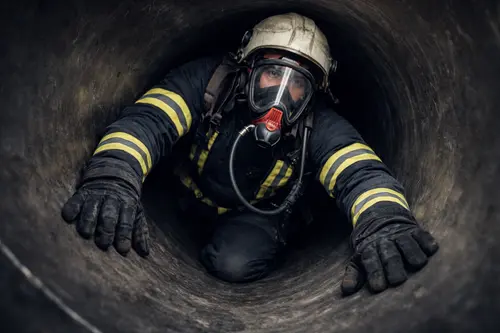
A confined space is generally an enclosed or partially enclosed area that is not designed primarily for people to occupy and may present risks because of its atmosphere, contaminants or the potential for engulfment.
Examples can include some tanks, pits, pipes, sewers, drainage systems, silos, vessels, trenches and crawl spaces.
Not every enclosed or restricted area automatically meets the definition of a confined space.
What will I learn during RIIWHS202E training?
Participants learn how to prepare for confined space work, identify hazards, follow workplace procedures and interpret an entry permit.
Training also covers selecting and checking equipment, applying control measures, communicating with relevant personnel, entering and working in the space and exiting safely when the task is complete.
Is there a practical assessment for Confined Space training?
Yes. RIIWHS202E includes both knowledge-based and practical assessment.
Participants need to demonstrate that they can prepare for confined space entry, use required equipment, follow permit conditions, communicate effectively and safely enter, work in and exit a confined space.
Can I complete RIIWHS202E fully online in Townsville?
Generally, no. The unit includes practical skills that need to be demonstrated.
Some providers may offer online theory or pre-course learning followed by face-to-face practical training and assessment. Others may deliver the course entirely face to face.
Check the individual Townsville listing before booking.
Do I need a confined space entry permit in Queensland?
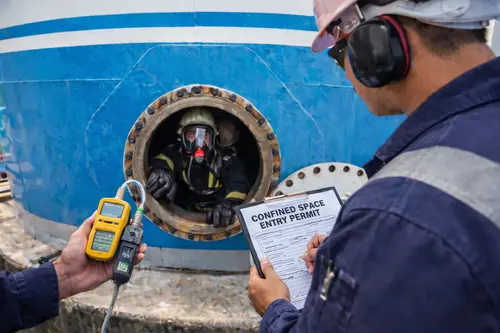
Yes, where Queensland confined space requirements apply, a worker should not be directed to enter a confined space unless a confined space entry permit has been issued for the work.
The permit identifies the space, authorised entrants and the control measures that must be followed.
Completing RIIWHS202E does not replace the workplace's entry permit, risk assessment or safety procedures.
Is a written risk assessment required before confined space work?
Yes. A confined space risk assessment must be carried out by a competent person and recorded in writing.
The assessment should consider the hazards associated with the space, the work being performed, atmospheric conditions, control measures and emergency arrangements.
Do I also need Gas Test Atmospheres training?
Possibly. RIIWHS202E covers confined space entry, but some jobs require workers to separately demonstrate competency in atmospheric testing.
MSMWHS217 Gas Test Atmospheres is a commonly associated unit where workers need to test oxygen levels, flammable gases or airborne contaminants using gas-detection equipment.
Your employer or worksite should confirm whether you need RIIWHS202E alone or a combined Confined Space and Gas Testing course.
Why is atmospheric testing important for confined space work?
Confined spaces can contain unsafe oxygen levels, toxic contaminants or flammable gases and vapours.
Atmospheric testing can help identify these hazards before entry. Depending on the risk assessment and workplace procedures, monitoring may also need to continue while workers are inside the space.
Is a standby person required during confined space work in Queensland?
Queensland confined space requirements include continuous communication between workers inside and outside the space, as well as monitoring by a standby person.
The standby person remains near the space, monitors conditions and can activate emergency procedures if something goes wrong.
They should not enter the confined space to attempt a rescue unless they are properly trained, equipped and authorised to do so.
What Townsville industries commonly use Confined Space training?
Confined Space training can be relevant to construction, utilities, water and wastewater, manufacturing, port-related activity, industrial maintenance, mining and resources-support services.
Townsville has a diverse industrial economy and acts as a major transport and service hub for North Queensland's mining and agricultural industries. This creates a range of workplaces where tanks, pits, pipes, vessels and processing infrastructure may present confined space hazards.
Is Confined Space training relevant to Townsville mining and resources workers?
It can be.
Townsville supports mining and mineral-processing activity across North Queensland, including businesses involved in maintenance, engineering, transport and processing.
Workers may encounter tanks, vessels, pits, hoppers, pipes and other spaces where confined space procedures apply. The exact training required depends on the role and site.
Is Confined Space training relevant to port and transport workers in Townsville?
It can be.
Port, freight and transport environments may include tanks, vessels, hoppers, pits and service infrastructure that can create confined space hazards.
Whether RIIWHS202E is required depends on the particular task and the workplace's confined space procedures.
Is Confined Space training relevant to Townsville water and sewer workers?
It can be particularly relevant.
Workers maintaining sewerage, drainage, water and wastewater infrastructure may need to access pits, tanks, pipelines or other areas that meet the definition of a confined space.
The exact training required depends on the task, employer procedures and whether the worker also needs competencies such as gas testing or permit issuing.
Is a Safe Work Method Statement required for confined space work in Townsville?
Where construction work is carried out in or near a confined space, it is classified as high-risk construction work under Queensland work health and safety requirements.
A Safe Work Method Statement must be prepared for high-risk construction work. The SWMS identifies the hazards, risks and control measures associated with the task.
A SWMS is separate from completing RIIWHS202E training.
Does RIIWHS202E include confined space rescue training?
RIIWHS202E covers entering and working in confined spaces, but it should not be treated as a specialist confined space rescue qualification.
Workplaces need suitable emergency and rescue procedures before confined space entry begins. Workers expected to perform specialist rescue duties may require additional rescue training and equipment.
Does RIIWHS202E expire?
RIIWHS202E does not have one universal fixed expiry period.
Employers, contractors and worksites may require refresher training or recent evidence of competency based on their procedures and risk profile. Workers should check the currency requirements that apply to their role.
Do I need PPE for a Confined Space course in Townsville?
Participants generally need suitable clothing and protective footwear for practical training.
Additional PPE requirements can vary depending on the provider and assessment setup. Check the joining instructions before attending so you know what equipment or clothing is required.
Can Townsville employers organise Confined Space training for a team?
Group or workplace training may be available through participating providers.
This can be useful for civil contractors, utilities, manufacturers, mining-service businesses, port-related operators and maintenance companies that need several staff trained in confined space entry.
For smaller teams, public course places may be suitable. Larger groups may find private or onsite training more practical where available.
Where can I find RIIWHS202E Confined Space training in Townsville?
Use FindTraining to compare current RIIWHS202E Confined Space courses in Townsville by provider, venue, date, price and delivery format.
Available providers, class dates, venues and delivery methods can change, so check the individual listing before booking.